Software as a strategic cost: why companies manage IT more poorly than energy or machinery
This abridged interview focuses on the reality of license audits, myths surrounding the secondary market, relationships with software vendors, and why software belongs among strategic business decisions, not just within the IT department.
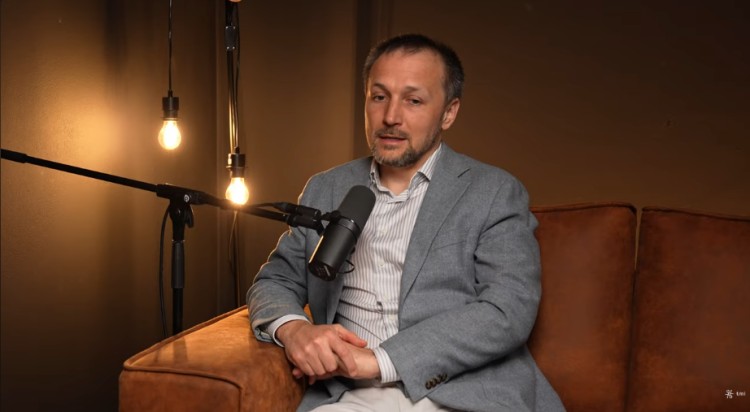
In this episode of the “Vše o průmyslu” (“All about industry”) podcast, Lukáš Smelík interviews Jakub Šulák, CEO of Forscope. Dive into the discussion about an area that fundamentally impacts costs, risks, and corporate flexibility – yet often remains under the radar of senior management.
What should we imagine under the term "secondary market," and how did you get into this field?
Like any other market, the software market has a primary section – similar to the market for new cars or apartments – and a secondary section where people or companies sell to one another. In software, this was neglected for a long time, hindered by the legal and licensing conditions of manufacturers.
About twenty years ago, an idea began to grow among university students in Britain: if I can resell a car or a house, why not software? At Microsoft’s London headquarters, they compiled a list of companies with the largest contracts and gave it to students for a study project. They began visiting large firms, buying up their redundant software, and reselling it.
In 2012, the first legal precedent was set in Germany, and the European Court of Justice later ruled that manufacturers cannot restrict the resale of software. Software is unique because it is intangible – a used car has different technical traits than a new one, but software is the same bit-by-bit copy; it functions identically. Therefore, distinguishing between "new" and "used" software is nonsense, much like wondering if you have a "new" or "used" stock share. At Forscope, we use the term "primary market" for buying directly from the manufacturer and "secondary market" for peer-to-peer company sales to ensure transparency.
Our podcast focuses on industry, where companies must digitalize. What solutions are most in demand? Is it general software or manufacturing-specific tools?
The secondary market requires a match between supply and demand. The market must be large; therefore, specialized industrial software is usually not traded here because it requires specific servicing. We are talking about the business layer and server infrastructure. Typically, this involves vendors like Microsoft, Oracle, or Autodesk. In industrial firms, software can represent up to 70% of total IT costs, making it a dominant area where we can provide significant help.
We often discuss monitoring energy consumption on machines. Can companies monitor their software the same way?
Exactly. That is why we developed OneSML. It allows companies to input all licenses and monitor which are being used, which are idle, and how to optimize them. I use the "family Spotify" analogy: mom, dad, and two kids all have subscriptions, but no one really knows how many are active. In large corporations with many subsidiaries, subscriptions often get lost. It’s 15–20 euro per user per month, but we recently worked with a company where this added up to 400,000 euro annually just in "waste" that could be cut.
Can you help companies turn software from an operating expense (OPEX) into an asset?
Yes. There are two business models. First, perpetual software – permanent licenses that you own. These are assets. If you migrate to the cloud or upgrade systems, we act as a broker and buy these redundant licenses from you, monetizing what would otherwise end up getting thrown away.
The second is subscription licensing. This is a service, not an asset – like a rental car. You can’t sell it, but we can help gather all subscriptions into one place and optimize the costs. Overall, industrial enterprises can see up to 30% savings through these projects.
What are the most common myths or risks?
The biggest issue is the prevalence of illegal offers. There are many sellers promising "new licenses" that are just photoshopped papers. A common trap is selling a product key instead of a license. It’s like someone selling you the key to an apartment but not the deed to the apartment itself. The key is worthless without the legal right to occupy the property.
Regarding safety, there is no technical difference between primary and secondary licenses – it's about the right to use. However, you must be careful about where you download the installation files. We always recommend downloading from the manufacturer. If you use a distributor, check their security certifications (ISO, etc.) to ensure the software hasn't been compromised.
Additionally, don't forget that if you use illegal software, the civil and criminal liability falls on the user (the company), not the seller.
When does the secondary market make the most sense?
It typically starts to pay off for companies with over 100 employees. We want customers to come to us whenever they feel a need for change in their IT. Software manufacturers are driven by profit, and resellers are often incentivized to push the most profitable (often most expensive) options. We are independent; we don't take kickbacks from manufacturers like Microsoft. This allows us to find hidden paths and gaps in licensing models that save money while meeting all technical requirements.
How does an audit work? Do you work with IT or Finance?
We start with an NDA, then get access to manufacturer portals or internal systems. Our specialists perform the audit with a goal of requiring only about one hour of work from the client's IT department for the entire project.
Are there specifics for manufacturing firms?
In industry, we often see fragmented decision-making, where a local branch is forced into expensive global solutions by a foreign "mother" company (often from the US, where the secondary market isn't as well-known). We help local branches argue for more economically advantageous domestic solutions.
What about the shift to the cloud?
The cloud is a huge opportunity for us because it creates redundant licenses as firms migrate. However, we are seeing a "rebound" effect. One large energy company migrated to the cloud and saw their costs jump from 40 million to 120 million euro annually. They’ve since stopped further migrations until they can build a private cloud. The cloud is great for scalability, but for stable systems, it’s not always the most efficient. We see the same with AI right now – firms are rushing into Copilot subscriptions without a clear value proposition. These waves eventually recede.
Who is the ideal partner for negotiations within a firm?
We aim for the entire "tripod": Finance, IT, and Legal. We act as a bridge because these departments often speak different languages. Usually, we start with IT because they have the data, but the motivation comes from Finance because we are talking about money. However, in the private sector, IT managers are also motivated to save so they can reinvest those funds into things like cybersecurity (NIS2) or digitalization.
How does a "healthy" software management approach look?
They should have one place where they can look and know exactly what they own or pay for – subscriptions or perpetual solutions, and what they use. That's the first step. Then, once a month, someone looks at this data and draws some conclusions based on it. For example: cancel these subscriptions because no one is using them. These two steps should work for the company – if they don't, it's a good idea to call us. We can help with both – collect the costs of software owned by the company and set up processes to make it work. The result is that it is usually possible to save about 30% of the costs, which IT or the entire company can then reinvest, digitize, etc.
What is the biggest misconception among management?
The biggest mistake is thinking that "someone else" is handling it. IT thinks Finance is watching the budget; Finance thinks IT is managing the licenses. This unclear responsibility and a lack of time lead to software being managed much worse than other strategic assets like energy or machinery.
Interested in watching the original, unabridged podcast? You can watch it here in Czech:
Software jako strategický náklad. A proč ho firmy řídí hůř než energii nebo stroje