Secondary software: How to digitalize your business without overspending
Secondary software markets allow organizations to legally buy and sell used perpetual licenses, often saving 30–70% on costs. Under EU law, these licenses remain fully valid if properly transferred and uninstalled by the original owner. This approach helps companies reduce IT expenses, improve software asset management, and reinvest savings into other digital initiatives.
In the physical world, the secondary market is a natural part of our economy. We buy used cars, trade pre-owned apartments, and browse second-hand bookstores. Yet, when it comes to the digital world, many businesses still operate under the "tunnel vision" that software must always be purchased brand new at full price.
In a recent interview, Mateusz Drozdowski from Forscope sat down with Agnieszka Mosór (Diginomia) to discuss why "software second-hand" is not just a niche curiosity, but a strategic financial tool for hospitals, municipalities, and corporations alike.
What exactly is secondary software?
The secondary software market involves the purchase and sale of perpetual licenses – most commonly from vendors like Microsoft. When a company undergoes a digital transformation, migrates to the cloud, or updates its infrastructure, they often find themselves with surplus licenses that are no longer in use.
Unlike a car that suffers from mechanical wear and tear, or a book with yellowing pages, software is made of "ones and zeros."
Drozdowski explains :
Code does not age in the physical sense. A digital license remains a fully functional asset regardless of how many times it has changed hands.
Is it legal? The rules of the game
The most common question from IT directors and CFOs is: Is this legal? The answer is a definitive yes, provided specific legal conditions established by European court rulings are met:
Perpetual License: The software must be a perpetual (one-time purchase) license, not a subscription.
Original EU Release: The software must have been originally put into circulation within the European Economic Area (EEA).
Uninstallation: The original owner must have rendered their copy unusable (uninstalled it) at the time of sale.
Chain of Custody: There must be a clear, documented history of the license, including the original purchase invoice and declarations of uninstallation.
Significant savings: 30% to 70% Off
For institutions managing tight budgets, the math is compelling. A standard operating system in direct distribution can cost around 230 EUR per unit. For a hospital or a large company with 500 workstations, that is 118,500 EUR investment just for the OS.
By tapping into the secondary market, organizations can save between 30% and 70%. These savings can then be redirected toward other critical digitalization needs, such as cybersecurity or hardware upgrades.
Security and support: Dispelling the myths
There is a common misconception that "used" software is less secure. From a technical standpoint, there is no difference.
Whether you buy a license directly from a distributor or through the secondary market, the software is the same. It receives the same security patches, updates, and bug fixes from the manufacturer during its supported lifecycle. The key to security lies in ensuring the installation files come from verified, legal sources – not random third-party websites.
Combating "digital mess"
Many companies today suffer from a "digital mess" – they own hundreds of licenses but lack a clear strategy for managing them. Drozdowski emphasizes that efficient Software Asset Management (SAM) is the cure.
Audit your assets: Know exactly what you are paying for and what is actually being used.
Reuse and Recycle: If an employee leaves the company, their perpetual license should be returned to the pool, not "left on the shelf."
Monetize Surplus: If your company is moving to the cloud, don't let your old perpetual licenses go to waste. You can sell them and turn "dead capital" into liquid funds.
The bottom line
Digitalization is no longer optional, but doing it "with a head" (smartly) is. Whether you are a small business owner or a procurement officer for a government ministry, the secondary market offers a legal, secure, and highly cost-effective alternative to expensive subscriptions and high-priced new releases.
Ready to optimize your software budget? Explore the possibilities of the secondary market and start digitalizing your business more efficiently today.
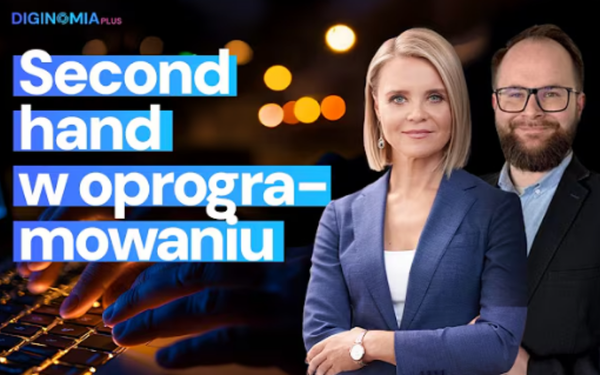
Watch the full interview hosted by Agnieszka Mosur
Note: This interview is in Polish.